
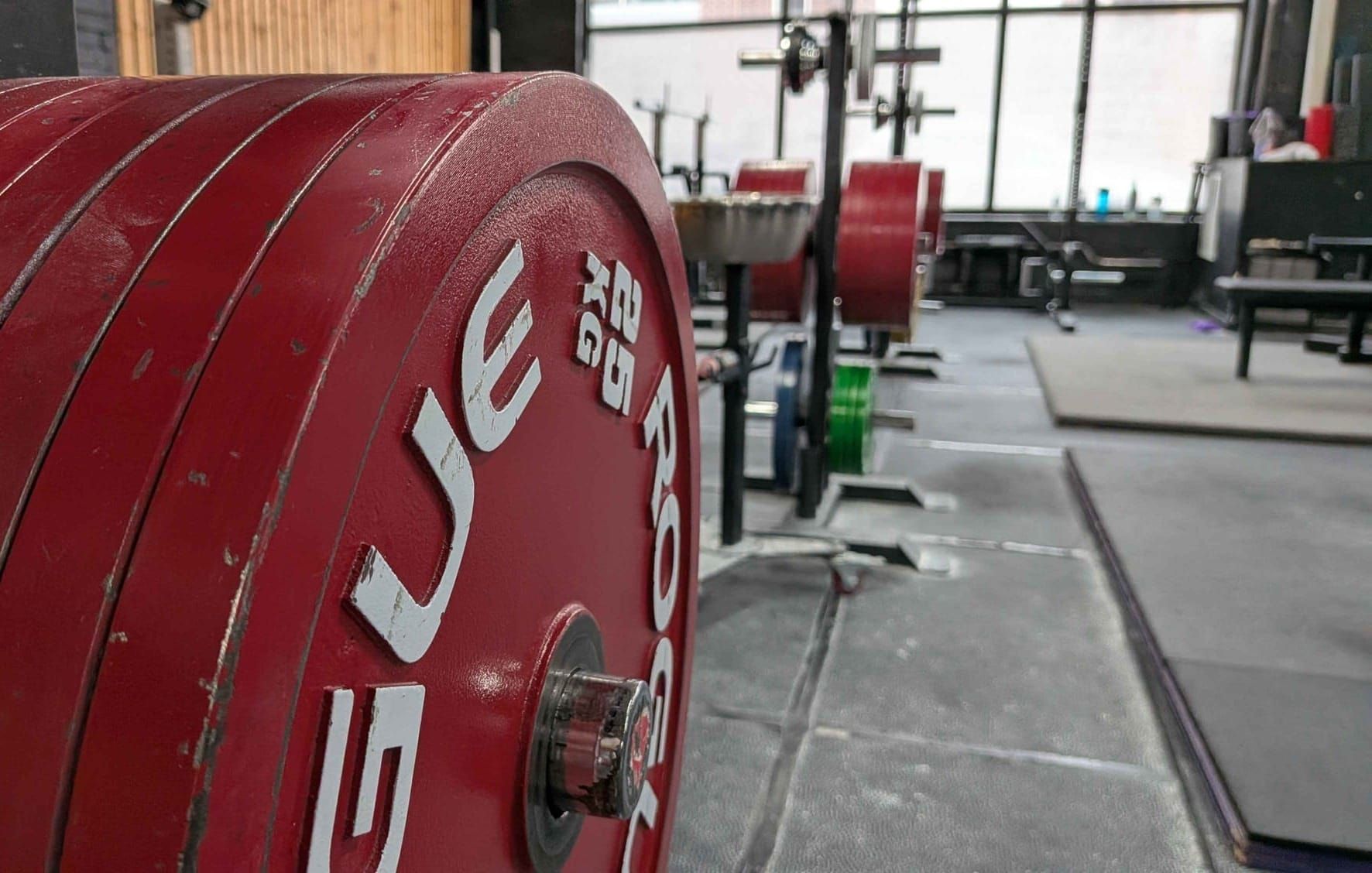
to lift myself up: one year of powerlifting
we interrupt your regularly scheduled bird programming to bring you this unrelated monologue

(Content warnings: disk slip & loss of physical ability, mentions of alcoholism, substance abuse, and eating disorders)
One year ago, I started lifting weights to prove that picking up ten-pound dumbbells again would shatter my body once and for all.
After my L5/S1 disk slipped in March 2020 (yes, the March 2020) while getting out of a bath, I was certain that part of my life was over. Prior to my disk slipping, I had few physical limitations other than a breathing dysfunction that prevents me from doing high-impact cardio. Then life changed in an instant.
I was able to get almost no professional care during the first year throughout COVID lockdown. Living alone, my healing was fractured, DIY, and incomplete. After a year of excruciating pain, the first physical therapist I consulted did not believe that a disk could have slipped at my age, misdiagnosed it as a muscular issue, and made the pain worse. I could not dress myself, retrieve broccoli from the refrigerator, get out of bed, take out the trash, or sit on the couch without pain. An MRI eventually diagnosed my disk in addition to early onset arthritis in my L5/S1 region.

While the physical pain itself was a constant source of stress, the psychological aftermath debilitated my quality of life for years. The only thing that soothed both the physical and mental ache was whiskey, and the excessive drinking deepened decades-old eating disorders.
Warned that my disk would slip again one day, I lived in constant anxiety that was superfueled by seemingly unexplainable bursts of pain coursing through my body. I was told by providers that I should never lift over 40 pounds again. (One friend with a disk slip was ordered never to lift anything heavier than a laptop.) I was told I needed to come to terms with new permanent limitations, that I would never run or jump or play sports or move a couch again. They were trying to help me by resetting my new normal.
All of the activities that now seemed impossible were corralled into a corner of my brain and set on fire, left to burn. Out of desperate self-preservation, I compartmentalized all of these possible futures and killed them one by one, like taking beloved old dogs into the backyard for a final goodbye.
But we got it wrong. Thank god.
I grew up playing lacrosse and soccer, running in the woods, and partaking in other rural-suburban shenanigans. My primary sport as a teen was sailing in Laser regattas around the Midwest, which was supplemented with year-round strength training- mostly calisthenics and dumbbells. I was never a nautical prodigy, but I loved trying to out-lift the boys.
Lifting was the hardest thing to toss on the burn pile. I had just started it back up again in late 2019 when I moved next to a gym. After years away from dumbbells, I was feeling strong again, which made the "never pick up 40 pounds" directive all that more painful. But something in strength training survived the flames when I poured gasoline on my hope for the future. Like a stone cradled in hot coals, it watched me strike the match and said "I ain't goin anywhere."
My partner started lifting heavy while reading Casey Johnston's weightlifting newsletter, the beloved She's a Beast, around 2023. I was taking OTC painkillers daily and drinking away whatever pain remained, spending most nights in a stupor on the couch. For months, he encouraged me to give lifting a shot ("maybe it could help your back!"), but my imagination was in a coma. I couldn't envision picking up dumbbells when I could barely pick up sandals off the floor without consequence.

With a lot of help, I quit drinking soon after I turned 30. I didn't want to spend another decade like that. Daily painkiller use continued, cycling between ibuprofen and aspirin every couple hours. The following year, my partner told me that Casey was coming out with a book about her experience getting into powerlifting. On a whim, I preordered it. The memoir collected dust for months as I pondered how it evangelized about something that seemed impossible for me.
Then I started doing physical therapy for a shoulder/back/neck injury that I got by sitting at desks too much. My hunched posture was shortening my chest muscles, tightening shoulder tendons, and disorganizing my upper back in a dozen ways. It forced me to reflect. I started asking myself what I wanted my future to look like, and when packing for a early flight one evening, I slid A Physical Education into my backpack. Sitting in O'Hare's third terminal at 5:30AM, tears streamed down my face after I finally cracked it open and asked myself if life could be different. Casey's book isn't about lifting with an injury. It's about finding value in yourself, getting out of your comfort zone, and hope.
In A Physical Education, Casey describes her "couch-to-barbell" 12-week program called LIFTOFF. It starts with almost no weights, using a broom instead of a heavy barbell to learn the motions. I was convinced it would shatter my spine into dust, but it was the only entry to lifting worth humoring. I checked in with the pain specialist that had reviewed my spine MRI, who was the only provider that said yes to strength training. "Absolutely," he stated without hesitation when I asked over the phone. "Give it a try."
Fuck it. If my disk slips, my partner will never bring it up again, those other doctors will all be correct, I will be correct, and I can die in agonizing constant pain just like... I always wanted.
The first week of LIFTOFF was terrifying. Bending over for hip hinges, squatting down with a broom on my shoulders, and doing pushups against the wall felt antithetical to everything I knew. But Casey has a follow-along video for the first 4 weeks of the program, during which she gives you this quick thumbs up between pushup sets. It got me through the fear three days every week.
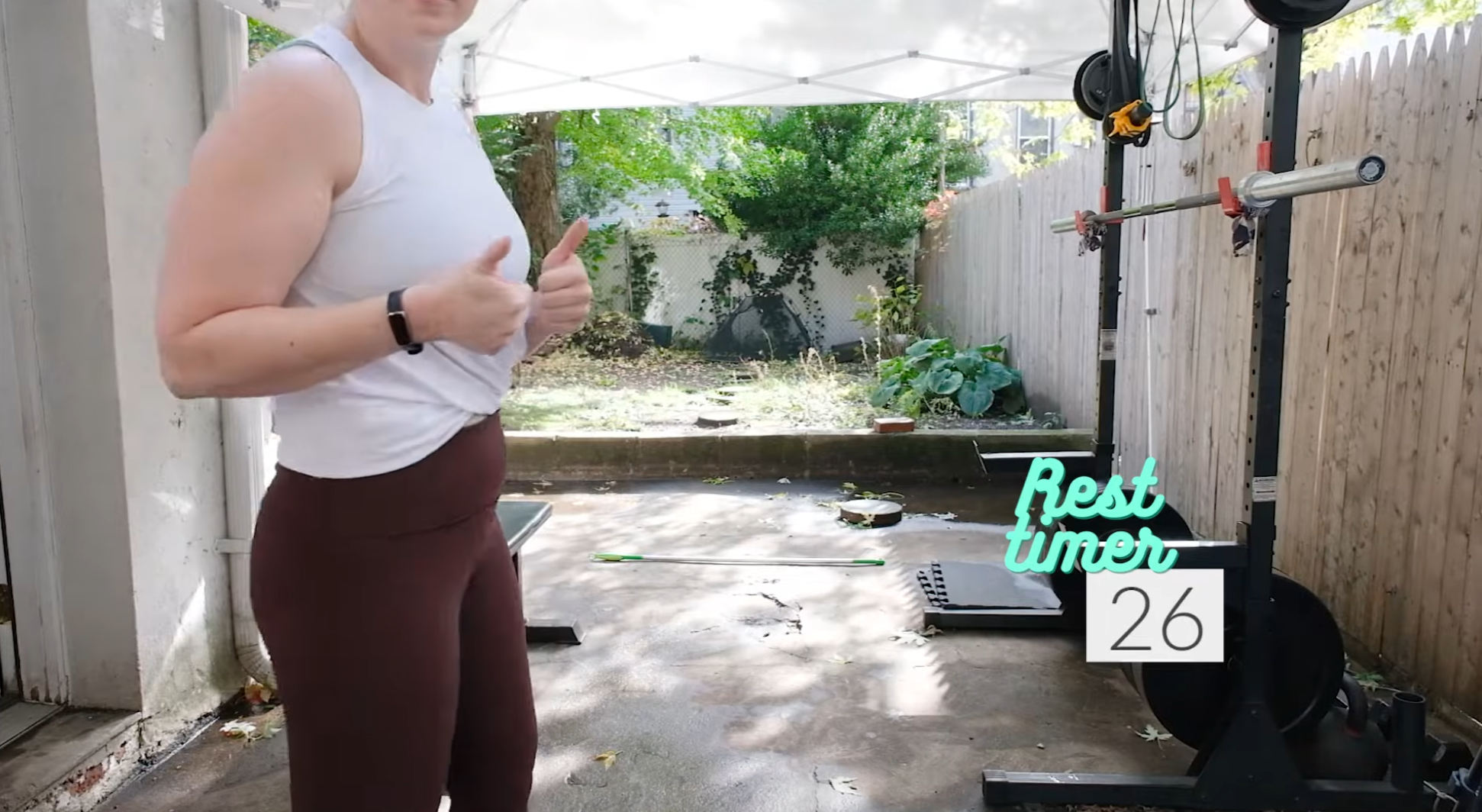
In each rep, I waited for explosive pain to flood my body once again. The chronic disk discomfort and sciatica continued, but they didn't worsen. In the beginning, the purpose isn't to lift as heavy as you can. You start by practicing the movements- positioning your knees, balancing evenly on your feet, bracing your core- until they start to become second nature. You start to learn the real meaning of "lift with your legs, not with your back" for those first four weeks.
Part of why Casey emphasizes the squat, bench, and deadlift trifecta of powerlifting is because these compound motions translate so directly to our everyday lives. Squat helps with getting down to and up off of the ground, even when loaded with weight. Benching gives us general upper body strength, which can also improve posture in our core and shoulders. And deadlift, sweet deadlift, teaches you how to lift things off the ground without hurting your back. All three lifts develop stronger bones (80% of osteoporosis patients are women and uterus-havers, who can lose up to 20% of bone density in just 5-7 years after menopause without resistance training,) strengthen the entire core and back, protect joints, and help us live longer more independently.
Before this, I couldn't pick up my cat's food bowls off the ground without pain because of how I was bending. Just a few weeks into practicing these lifts, the way I moved about my life started to change for the better. I started to be happier. I carried myself taller.
The broom was swapped out for 5lb dumbbells. LIFTOFF emphasizes the importance of rest and patience. Just 17 minutes, 3 days each week, doing the motions in the tiny space between the bed and my desk. I had never been told before that this isn't supposed to be more than I can handle, that working out wasn't supposed to be painful or self-punishment. That training could be about loving myself, not loathing myself.
The 5lb dumbbells transitioned to 15lb dumbbells. I started talking online to others who got into lifting through Casey's blog and similar resources like Megsquats. I was shocked to discover how many of them had back injuries. They lifted heavy with scoliosis, after major spinal and knee surgeries, in their 60s, after complicated pregnancies, and despite arthritis. It just didn't make sense to me, but here we were. My usual aches continued, but the anticipation of life-changing pain went unsatiated. Thanks to my strength training as a teenager, I progressed quickly. The body remembers. I started going to the nearby university fitness center when it was time to graduate from dumbbells. The anxiety felt heavier than anything else in the weight room.
At this point, I had learned to co-exist with my fear of the biweekly dumbbell Romanian deadlifts. RDLs and deadlifts use muscles in your lower back, so they were particularly anxiety-inducing. Practicing this hip hinge movement with a broom (which would lead up to barbell deadlifting) had demonstrated that bending over, picking something up, and putting it back down would not kill me. It taught me how to bend at the hips with a neutral spine and braced midsection. I was still scared but chose to trust the process. So I finally deadlifted, squatted, and benched with a 45-lb barbell for the first time in my life.
I gradually added 10, then 30, then 50 pounds to the deadlift bar, lifting a bit heavier each week. Then something really weird started happening on my deadlift days. I would enter the gym with my usual sciatica and pain down my right leg, deadlift heavy, and walk out with a little less discomfort than before the session. I reached the 150lb deadlift milestone. I started leaving the gym with no pain. The heavier I lifted, the longer it took for the sciatica to return.
I began learning how to listen to my body again. For years I had waved aside everything that my body was trying to tell me, like a hungover babysitter tuning out the shrill cries of a toddler. I had concluded that all my body had to say was "I am in pain," and that acknowledging those signals only led to despair. Any other messages- hunger, soreness, fatigue- were drowned out either by the pain itself or my fear of it. I had forgotten how to notice them.
The thing is- you have to notice body signals if you are going to try to pick up two hundred pounds for the first time. Powerlifting is a sport based on progressive overload, in which you are increasing the weight that you lift over time as you get stronger. If you've never done strength training, it's not a great idea to walk up to a barbell loaded with three hundred pounds and try to lift it. That's gonna hurt anyone. Even if your legs can lift it, maybe your grip or core aren't strong enough. These free weight compound lifts strengthen muscles in groups, rather than doing individual muscles one-by-one like on weight machines. Your body builds as a team with all parts stronger together. My back- even that L5/S1 disk- is part of the team.
I also came to appreciate that the "heavy" part of "lifting heavy" is entirely relative and contextual to the individual at a given point in time. One person's 40-lb bench is just as "heavy" as another person's 250-lb bench in relative terms. And maybe the next week, that load is too heavy or not heavy enough because they slept poorly, ate really well the previous day, or gained more muscle. But the lifter doesn't know until they load up the bar, and give it a shot. It's supposed to be manageable, but still challenge you.
In order to find that sweet spot, you have to ask yourself basic questions like "How did that feel?" "Could I have done more?" "Is my left side more sore than my right?" "Was that too much?" "Where am I tired?" and then hear the answers from within yourself.
And that means you have to listen.
For many, deadlifting your body weight is one of the first common major milestones in powerlifting. Bending over, bracing your midsection, and literally picking yourself up off the ground is one of the biggest feelings in the world. I will never forget the first time. Staring across the gym at the mirror at myself. Standing straight up, knees locked, 190lb of steel and rubber in my hands, eyes wide, heart pounding.
It's never supposed to be more than you can handle.
I walked out into the cold winter sunshine with no sciatica. I wept on the drive home. I took no painkillers that week.
I started working with a coach to fine-tune my lifting form as I progressed, switching to a powerlifting gym. I talked to experienced lifters who had been told never to lift heavy again after disk herniations from car accidents or compound spinal stress fractures. Then I would see out of the corner of my eye from across the gym as they deadlifted 300, 400, 500 lbs.
They were told by doctors that lifting heavy just wasn't for people with injuries, that their backs needed to be protected, that we needed to be careful. So they found other doctors. I was lucky that I talked to a spinal pain specialist that gave me the green light to lift. A lot of people never get to have that conversation, and they give up the medicine.
I don't purely lift heavy because it's good for me. I lift heavy because it makes me feel incredible. I love how I feel when I walk out of the gym. I love the reward of lifting a little heavier each month, setting personal records, and watching my quad muscles blow up like the legs of an ox. Sciatica flares up sometimes, but it always subsides. I still get nervous when I load up more weight than I've ever lifted, worrying certainly this will be the squat that blows my back out, but that fear has never been right. It might be one day. But I'll be so goddamn strong that recovery won't be from square one, and I'll figure it out.
And until then, I will lift myself. Every week, I lift myself on that barbell. Up off the ground. Up out of the pits of despair, up out of rock bottom. Up until I'm standing tall. Then I put the barbell back down, and I do it again.
It's never supposed to be more than you can handle.
As it turns out, I could handle a lot more than I thought.
tips & resources
If you've made it this far, thanks for reading! I know this post is different than most of mine, but I wanted to share my experience at my one-year milestone. Lifting heavy might not be everyone's favorite method of resistance training, and recovery from injury looks different for each person. But maybe posting this story can help some folks. I never expected things to play out this way until I gave it a shot.
If you're considering starting to lift heavy, here's a little list of advice for new folks that I've collected over my first year.
- Start small. I love LIFTOFF because it starts with no specialized equipment. It's great for people with truly zero strength background. It is broken into three phases, and the first phase takes less than 20 minutes, 3 days per week. You could do this program just two days each week and still get something out of it. At no point should the workout take you more than 45 minutes. Casey also explains MUCH more than the lifts themselves- she also covers recovery, some nutrition stuff, and more.
- Eat. Building muscle requires food. Do not throw away your hard work by crash-dieting or undereating while lifting. You will be hungrier if you train for strength, and learning to love/work with your hunger is very important. You need protein to build muscle, carbs to have fuel for your workout (and life), and fat to feel satiated. I started tracking my food intake about 8 months into lifting but this is unnecessary if it makes you uncomfortable, and there's a lot of great online advice about how to get more protein without tracking. Lifting has overhauled my relationship with food for the better, but that doesn't mean it hasn't been challenging. My bodyweight has gone up and down a lot in the last year. Fluctuations are part of the process, and learning to live with that has been really good for me.
- Rest. Your body is working hard when you're in the middle of a session and on your rest days. Do not sabotage your recovery by caving to the feeling that you "should be doing something." Stitching those muscles back together so that you're stronger for next time takes a lot of effort! Perhaps it feels silly to sit on the couch on off-days, but you are very, very busy at the cellular level. I love powerlifting because if I overdo it, I risk being punished by not being able to lift as much as I want during the next session. I benefit from built-in limits.
- Set goals. Why are you lifting? What types of milestones can you work towards? Make lifting fit your life, not the other way around. Set both short-term goals (what you want to achieve in a day or month) and long-term goals for within a year or a decade. Personally, I want to still be able to deadlift 300 lbs in my 60s. Make sure some of your goals are metrics-based so you can track your progress.
- Have a plan. Scuba divers follow the mantra, "plan your dive, then dive your plan." Know what you're lifting before you start each session, and follow through. To build strength, you need to work the same muscles many times week after week. This is why it's helpful to have a prewritten programs like LIFTOFF, GZCLP, or Stronger By the Day. If you do something different every time you go to the gym, perhaps it feels good (and that's great!!), but it won't efficiently build strength over time.
- Find help. If you have the resources for professional guidance, don't be afraid to do it early. I began lifting with a powerlifting coach after 3 months of LIFTOFF to refine my lifting form and resolve some overfatigue issues. I also started seeing a strength-training dietitian to help me manage my appetite by tweaking my food intake. Your first year of lifting brings a lot of change. Going through that year with help can make make it smoother and more rewarding. It's never too early. Do not work with professionals that make you anxious, uncomfortable, or self-harmful.
- Make friends. Help doesn't just come from professionals. Seek out communities (online or in-person!) that can support your lifting journey. Having somewhere to post "form check" video recordings where you can get feedback on your lifting form can go a long way. Find somewhere to ask questions, hear other people's experiences, and stay motivated.
- Kill the terrible little perfectionist living in your brain. It does not serve you. You don't need perfect form. You don't need to buy a bunch of fancy equipment. Just get started, improve over time, find ways to get feedback or guidance, and trust the process.
- Other little notes.... Drink lots of water. Push your limits. Be very careful with your fingers and toes around heavy equipment. Bask in feeling strong after the gym. Wear the right shoes (flat, firm ones like Vans or Converse are the budget option.) Consider creatine! And always get your farts out before you squat.
And here are some of my favorite resources that I've relied on in my first year of training (I do not associate directly with any of these resources, and want to note that their politics vary heavily):
- Casey Johnston's blog, She's a Beast has many years of content that hit the FAQs of weightlifting.
- Casey's memoir, A Physical Education: How I Escaped Diet Culture and Gained the Power of Lifting, is a great motivator. No diet culture bullshit.
- And Casey's program, LIFTOFF: Couch to Barbell, got me started.
- Megsquats is "on a mission to get a barbell in every woman’s hands." She has excellent form videos on Youtube that I used constantly and a well-regarded lifting program called Stronger by the Day.
- Meg also has a "Before the Barbell" program for folks that are completely new to strength training, similar to Casey's LIFTOFF.
- The Starting Strength book is partially the foundation of LIFTOFF and a common starting point for people who prefer learning through reading over videos.
- Many rests between sets were spent watching form videos from Alan Thrall, Calgary Barbell, Starting Strength, and Jeff Nippard.
To be honest, I didn't write this for you. I wrote it for myself. I need to have all of these fresh memories compiled so that if I ever take living pain-free for granted again, I can give myself a way to remember. Someday, I might need these words so I can lift myself up again. But I'll be more ready than ever.
ok now go get strong
-becca