
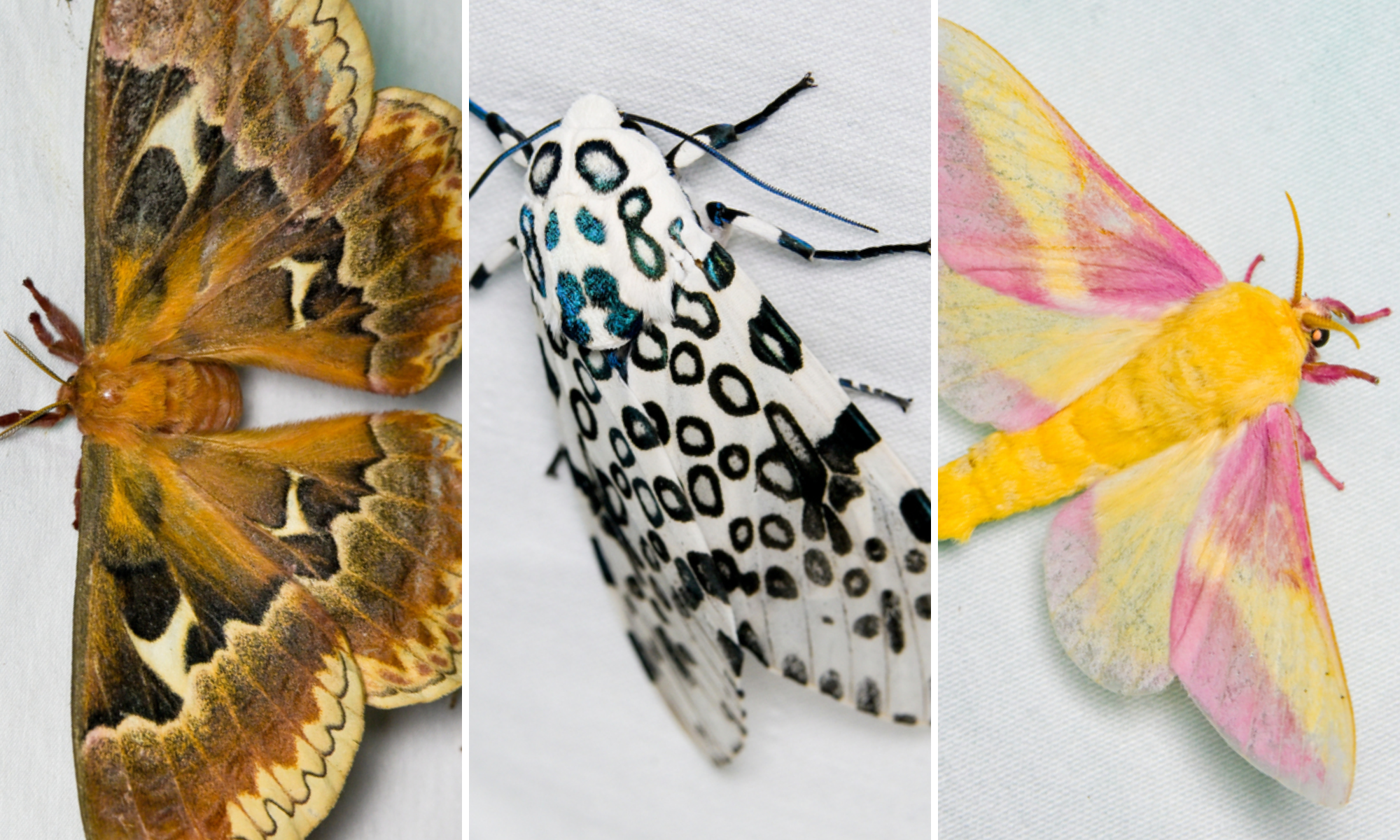
ego death at mothapalooza 2026
i am now 200 moths piloting a skin suit

Last weekend, I underwent the otherworldly experience of attending Mothapalooza for the first time. Basking in the afterglow, my mind is vibrating as I scroll through photos from the short weekend. I scarcely believe that I was only there for two nights.
Mothapalooza is a (mostly) annual event that has been undertaken by Arc of Appalacia, a 501(c) stitching together a valuable portion of our fragmented eastern deciduous forests. Designed to welcome experienced and beginner moth-ers alike, this 2-night extravaganza a few hours east of Cincinnati gathers insects enthusiasts like... well, moths to a flame.
daytime activities
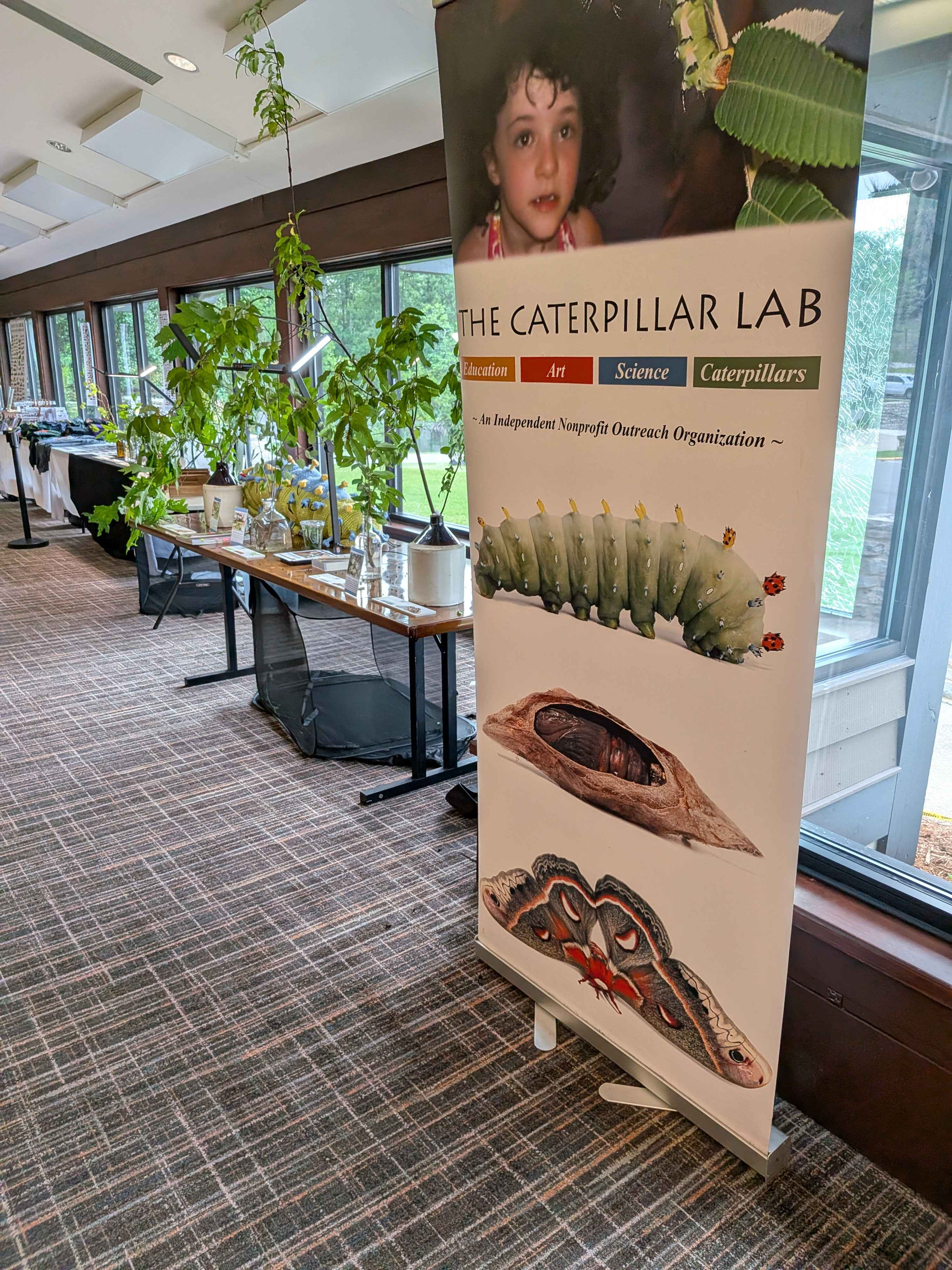
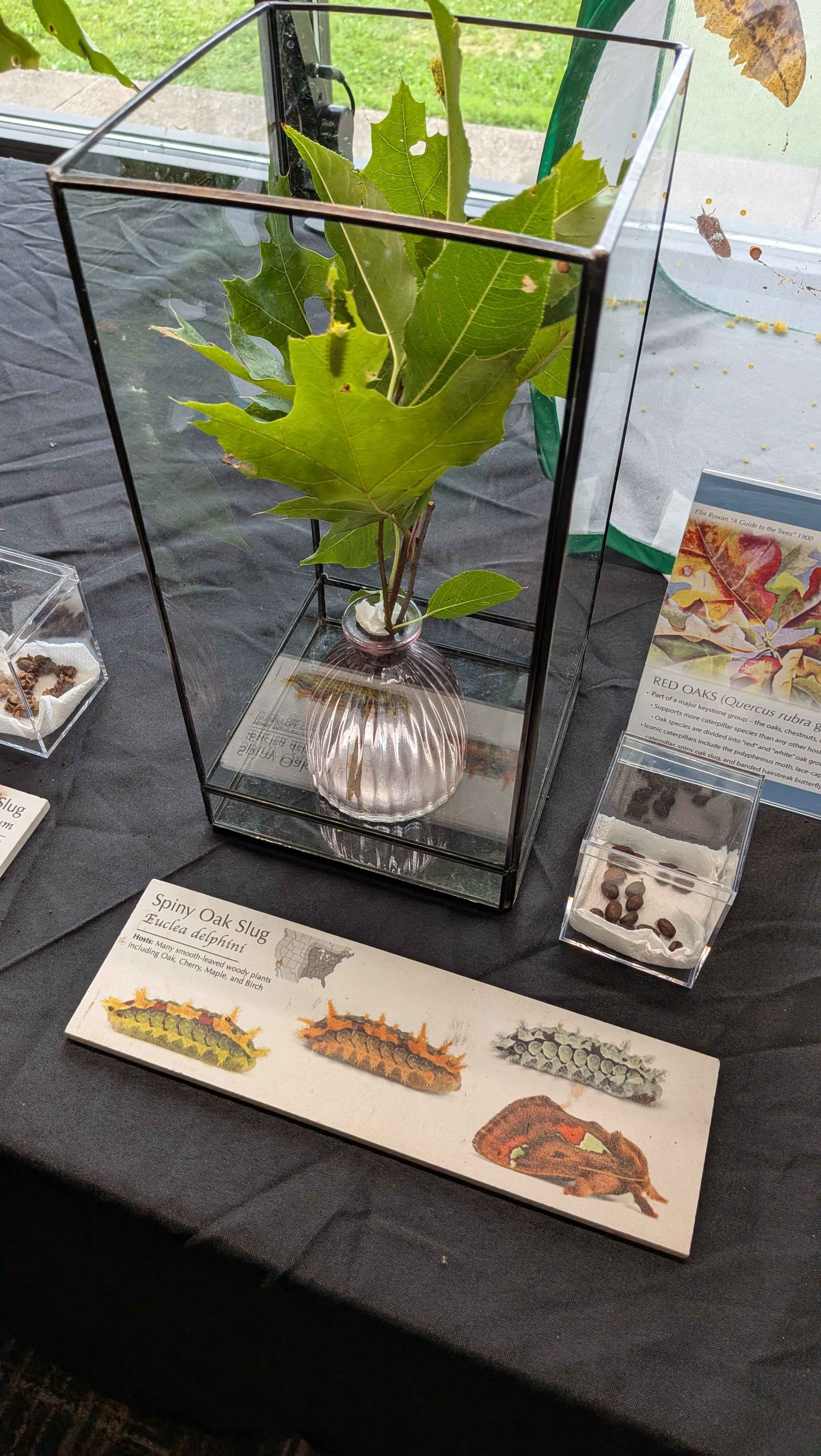
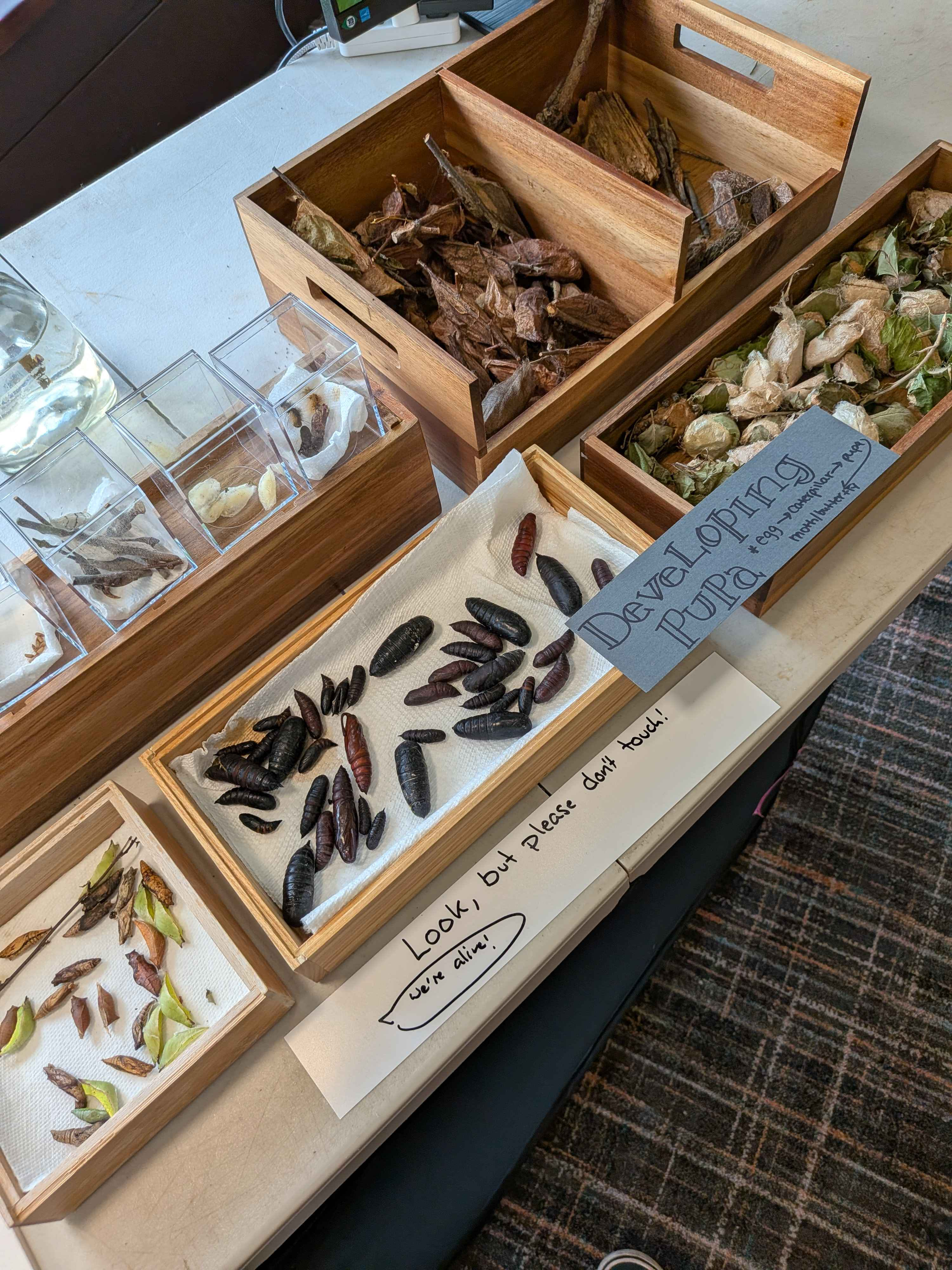
After hitting the registration table in the Shawnee Lodge lobby, we were dazzled by displays of live caterpillars munching on host plants. The Caterpillar Lab hand-raises native caterpillars for educational programs, research initiatives, and media projects. Hours could be spent here, admiring the live critters at different life stages.
After dinner in town (I stayed in Portsmouth nearby after learning the lodge rooms fill up rapidly), we convened at the Shawnee Lodge for the evening programming. The room was buzzing with energy as the audience settled in.
Speakers across the two nights included Danae Wolfe (aka Chasing Bugs), members of Arc of Appalachia, "digital adventurer" Dr. Andrew Quitmeyer, Sam Jaffe and Sara Burrell from the Caterpillar Lab, and others. We laughed, we cried, and we all sat on the edge of our seats as the sun began to set.
evenings
After the evening speakers, more than 120 energized moth-ers stepped out in the humid night together as we migrated in little flocks across the stations. Several light stations were positioned right outside the lodge, and buses shuttled attendees to the off-site stations beyond walking distance.
I've spent many late nights at sheets in the Midwest since I was introduced to mothing by Jeanette Jaskula at the Indiana Dunes Birding Festival. No sheet that I've attended previously could have prepared me for what we saw at Mothapalooza. The variety, density, and quality of moths (and beetles!) forced a total system reset in my brain.
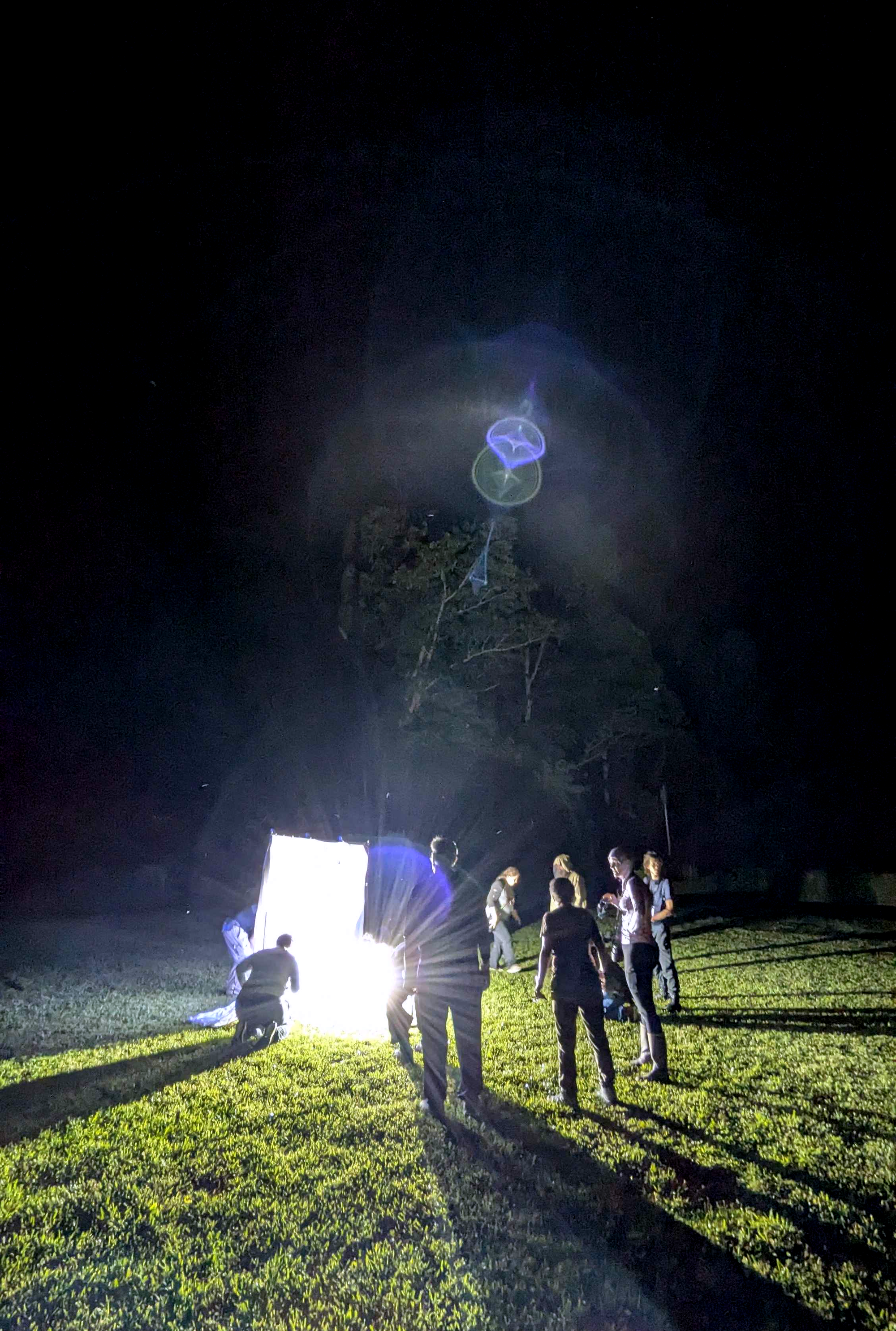
If you haven't attended a moth sheet night before, it looks just like the photo above. A bright light illuminates a white (usually cotton) bedsheet that is hoisted on tree branches or a frame. The moths are disoriented by the light and fly around in confusion before landing on the sheet to rest. Once they land, it's easy to observe them and take photos for documentation.
On most nights that I've attended, just three or four unique moth visitors in addition to the usual species can make for a good evening, especially when conditions are not ideal. At Mothapalooza, we were in a moth biodiversity hotspot. Surrounded by rich second-growth Appalacian woodlands, our location was specially equipped for both variety and quantity.
the moths!!
Over the two nights, I observed more than 120 moth species (100 of which I had never seen before!) I expected to have much more species overlap with what I've seen at sheets in other Midwest states, so that was a big surprise.
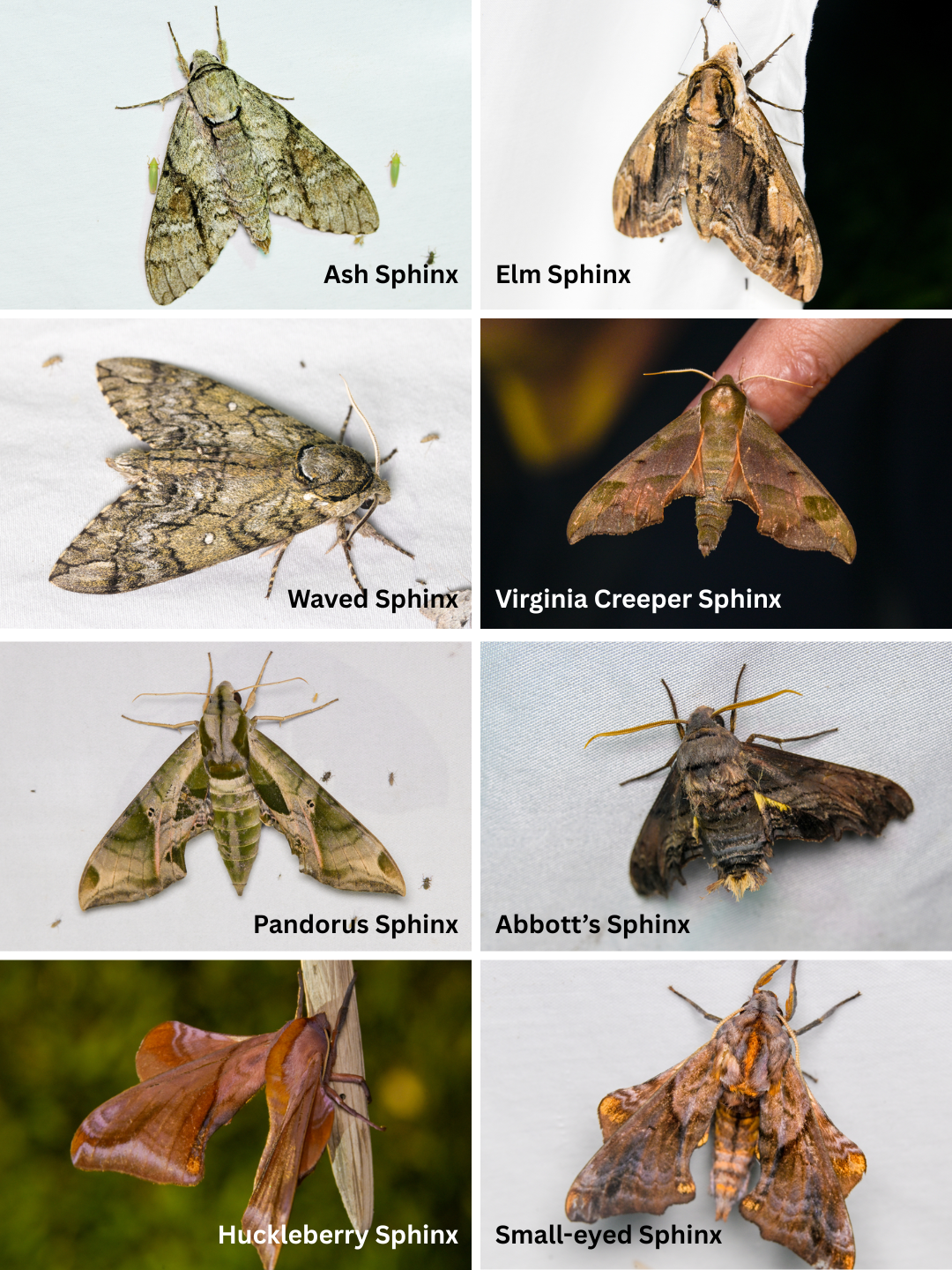
This included 9 sphinx moth species, almost all of which were new to me:
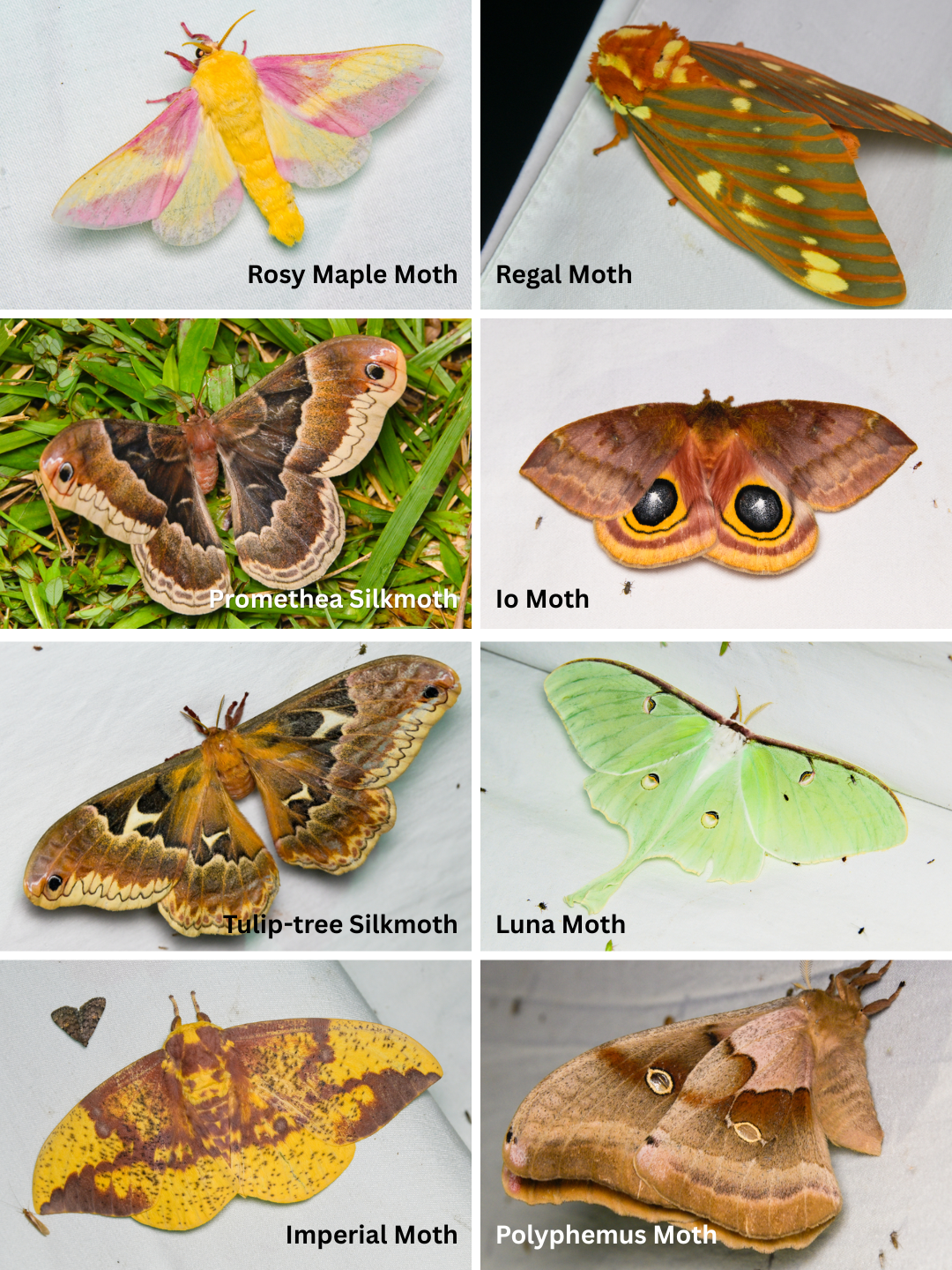
There were 10 Emperor and Giant Silk Moths that visited the sheet. Most of these were new to me. There were so many Imperials that they became a nuisance as their large bodies would collide with our heads or with the sheet, knocking the smaller moths into the air.
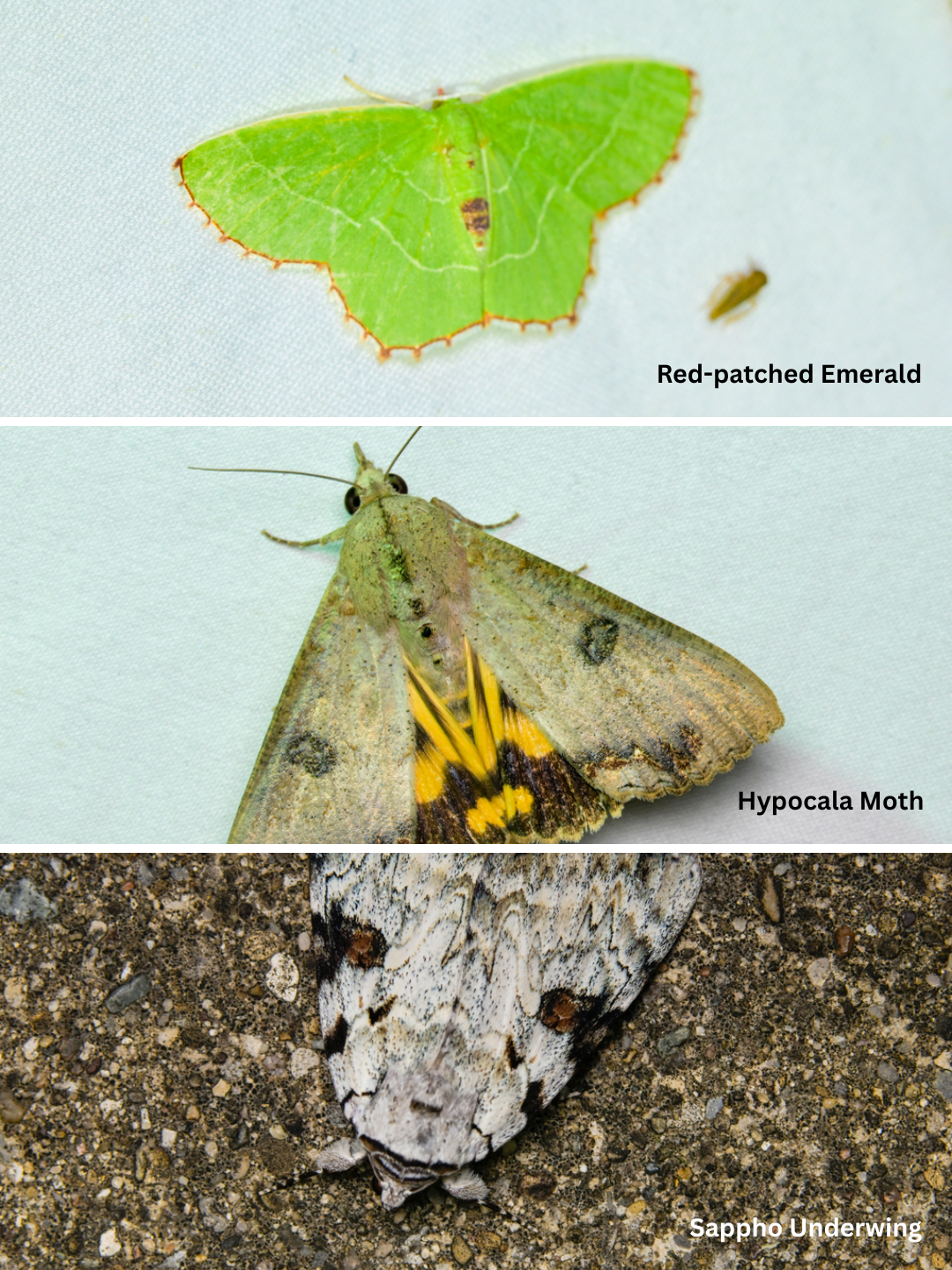
There were several surprising species that excited the most experienced moth-ers. The first two were identified by Sam Jaffe. This was just the second time that Red-patched Emerald and Hypocala Moth got iNat observations in Ohio. Both species are usually much further south.
I'm pleased to say that I uploaded the first Sappho Underwing iNat observation in Ohio. I was not the one who noticed it for the same reason it was found- I had stepped aside with a helper because my glasses broke at 2am.
The kind person who stepped away from the sheets with me to help zip-tie my frames called out as I, stumbling around without glasses, almost stepped on a large moth. We both went "huh, what is that?" (me, squinting through poor vision) and each took a photo. I hope they too will upload an iNat observation.
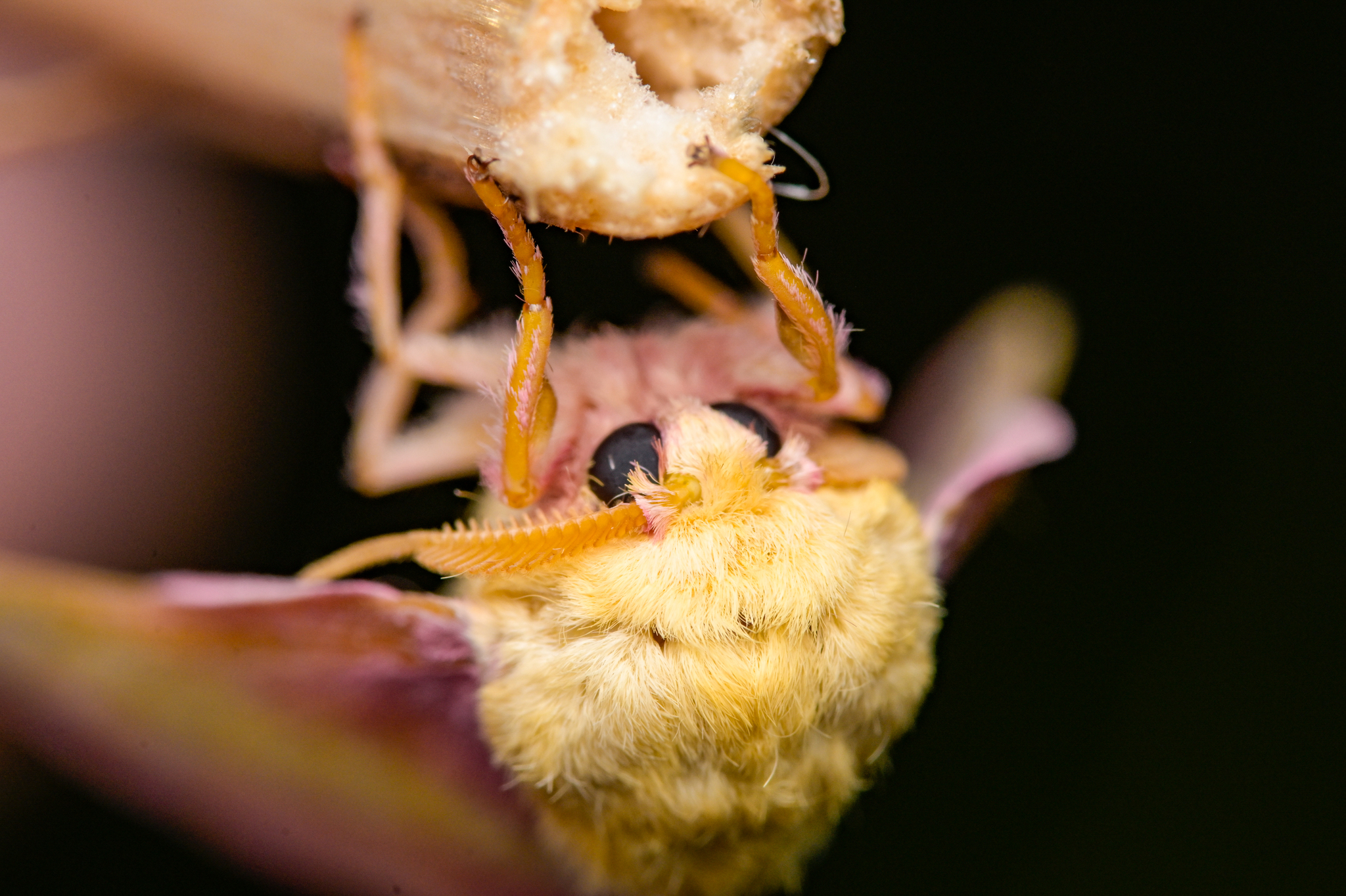
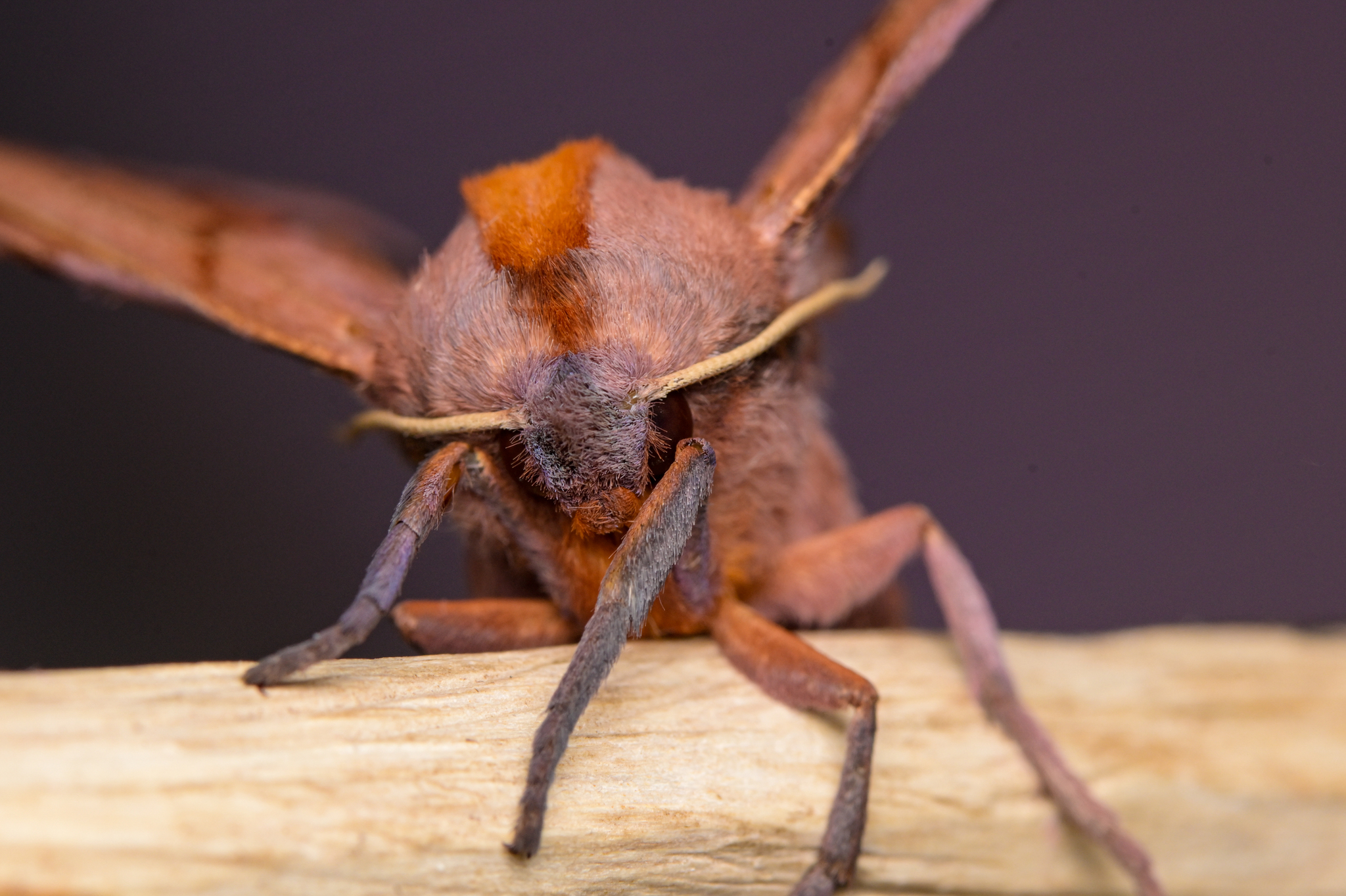
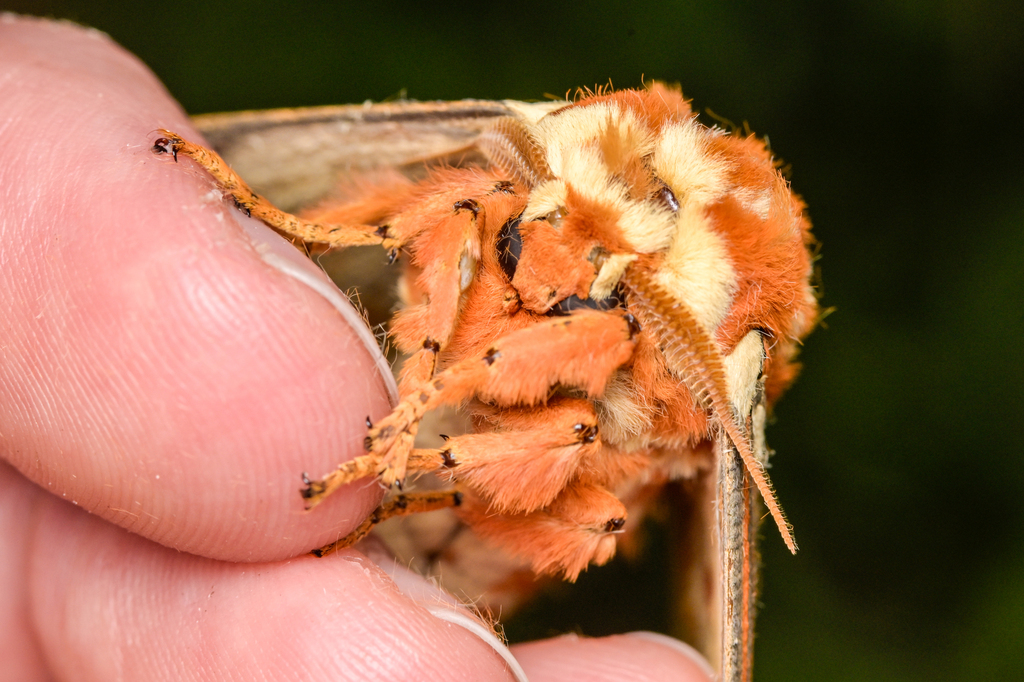
I really love taking close-up photos of moths because their faces are just so sweet. The soft "fur" and big eyes in portraits are irresistible to me! These are not my best bug portrait photos because I was so overwhelmed by all the activity. Next year I'll have to remember to slow down and really enjoy the time with these guys.
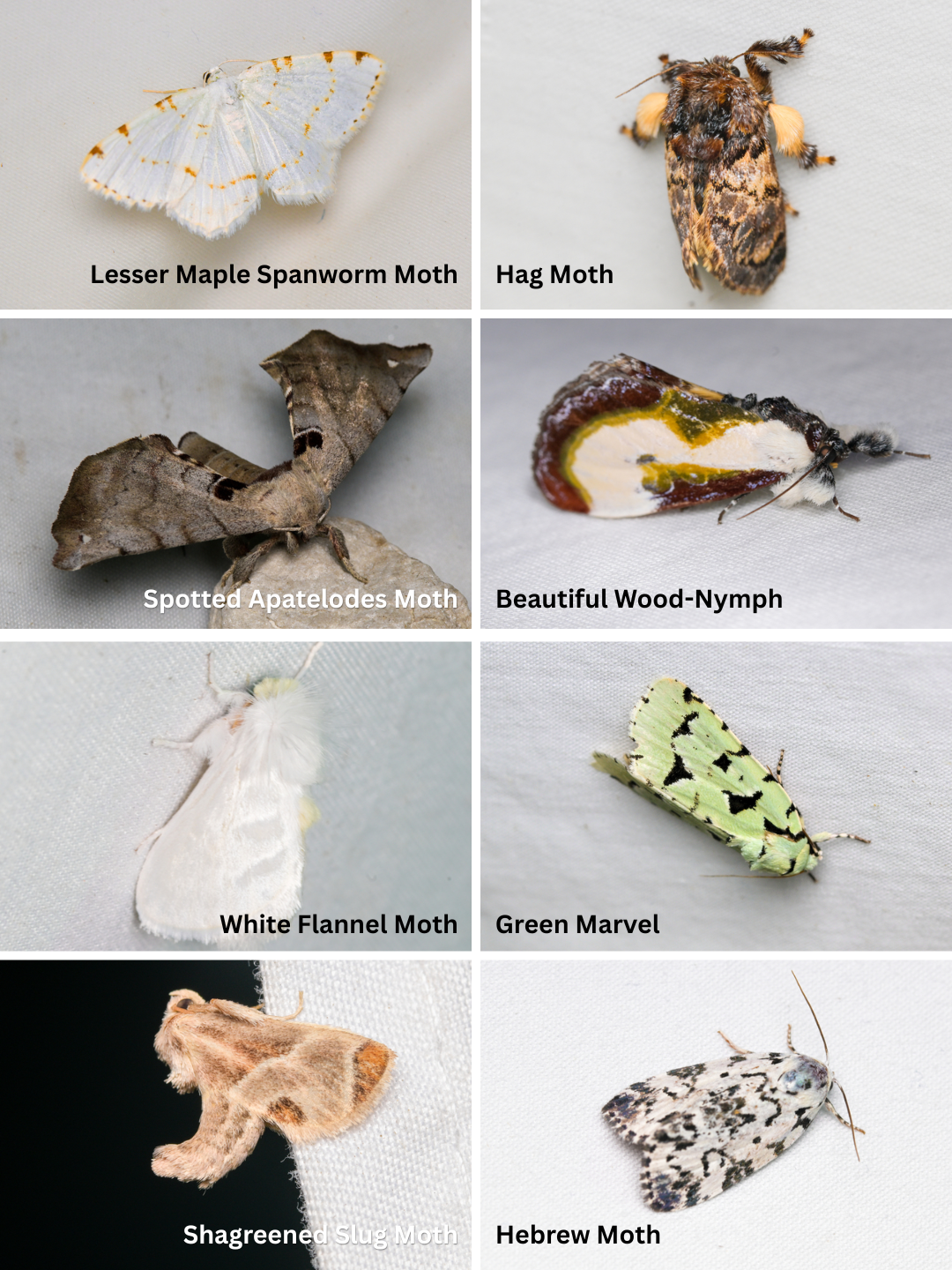
There were a lot of other very unique moths that were just fun to see, regardless of unique size/rarity. Green moths are always amazing in person, and I find slug moths to be very funny.
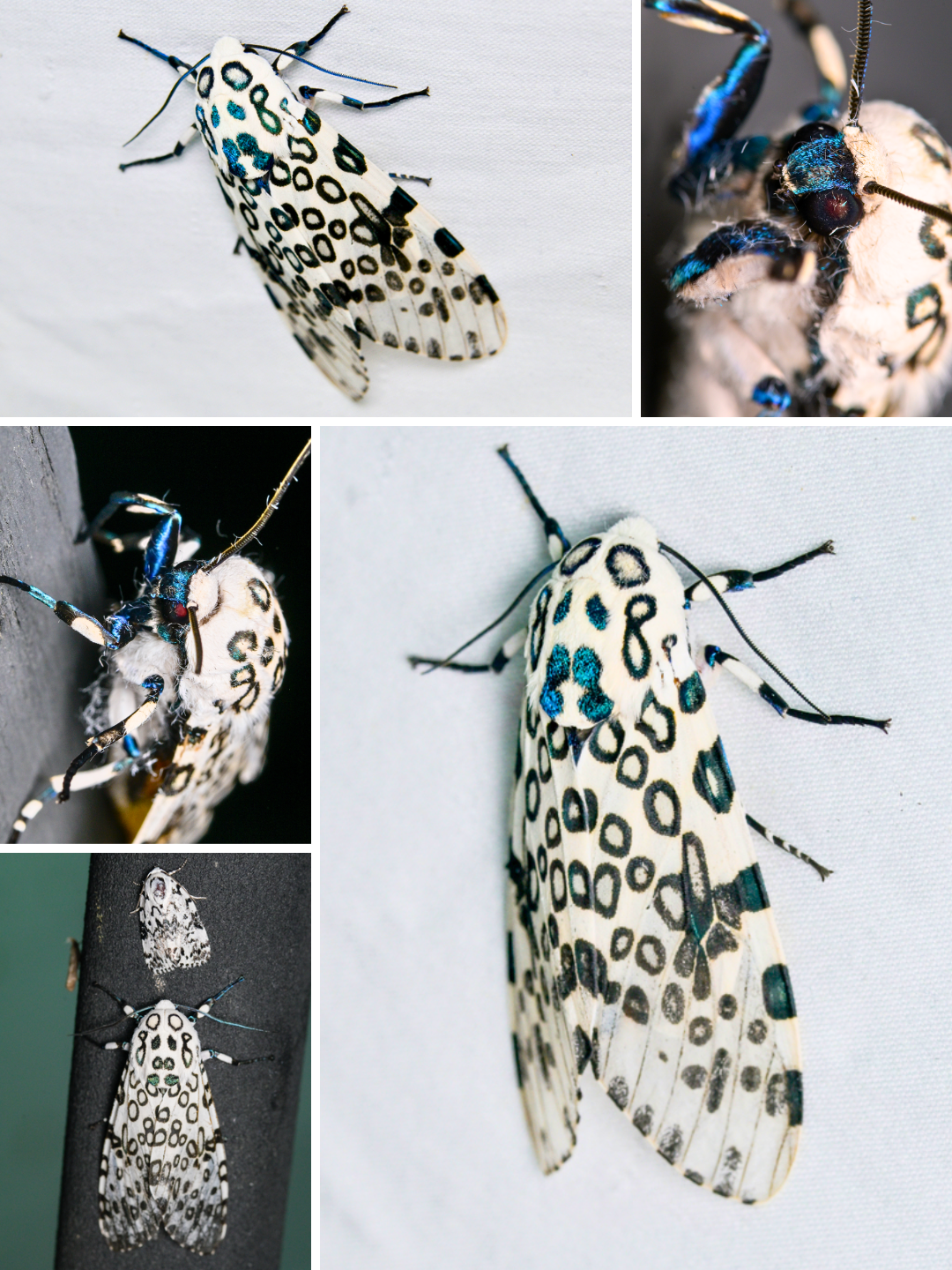
And finally... the moth that I really set out to find at Mothapalooza. I told my friend that if it was the only species that I saw that weekend (unlikely), then I would be happy. Thankfully, I got to see more of them than I could have asked for. Say hello to the unforgettable Giant Leopard Moth.
iNat projects
You can view the iNat project page with all species observed at Mothapalooza here.
Here's the iNat project containing non-moth species observed around the lodge including frogs, Eastern Hercules Beetles, stag beetles, an owlfly, warblers, Michigan and Canada Lilies, and many more exciting critters.
Thanks for reading! If you've never gone mothing before, consider checking out my post + zine on how to build a bucket trap. Thankfully, you don't need to travel to a special event to discover what flutters around at night.